
Refrigerant safety information
Refrigerants and pressurized cylinders require correct identification, trained handling, compatible equipment, and careful storage and transport.
Last updated: August 20, 2026This page is only general guidance. The cylinder label, valve instructions, Safety Data Sheet (SDS), equipment manufacturer instructions, and applicable law control. If information conflicts, do not proceed until a qualified professional resolves it.
1. Qualified and lawful use
Refrigerants should be selected, handled, recovered, charged, and disposed of only by people who have the training, tools, certification, and authorization required for the specific equipment and application.
- Verify whether EPA Section 608, Section 609, or another credential is required.
- Use refrigerant only in a system expressly designed or approved for it.
- Never identify a refrigerant only by cylinder color; confirm the label and product documentation.
- Never mix refrigerants or use an unknown or contaminated product.
2. Understand the hazards
Pressure and temperature
Cylinders contain material under pressure. Heat, physical damage, overfilling, incompatible fittings, or valve misuse can create a serious release or rupture hazard.
Cold contact and oxygen displacement
Rapidly released refrigerant can cause severe cold burns. Escaped vapor can reduce oxygen, especially in an enclosed or low area.
Flammability classification
Some products, including certain A2L refrigerants, have specific flammability and ignition-control requirements. Follow the SDS and equipment instructions.
Decomposition products
Heat, flame, or hot surfaces can create hazardous decomposition products. Keep cylinders and releases away from ignition and high-heat sources.
3. Handling and personal protection
- Work in a well-ventilated area appropriate for the refrigerant and task.
- Use eye, hand, skin, and respiratory protection specified by the SDS and employer safety program.
- Use rated recovery, charging, leak-detection, ventilation, and electrical equipment compatible with the refrigerant.
- Keep valves capped or protected when the cylinder is not connected.
- Do not heat, puncture, drop, drag, roll, refill, alter, or tamper with a cylinder.
- Do not vent refrigerant. Use lawful recovery and recycling or reclamation procedures.
4. Cylinder storage
Store cylinders upright and secured against falling in a dry, well-ventilated area away from heat, sunlight, flames, electrical hazards, corrosive materials, incompatible chemicals, and unauthorized access. Observe all label temperature limits, fire-code rules, quantity limits, and separation requirements.
Do not use a cylinder with severe corrosion, dents, heat exposure, a damaged valve or guard, an unreadable label, suspected leakage, or any other unsafe condition.
5. Transport and shipping
Refrigerant cylinders may be regulated as hazardous materials in transportation. Packaging, markings, labels, documentation, quantity limits, carrier acceptance, vehicle rules, and employee training can apply.
- Keep cylinders secured upright with valves protected during authorized transport.
- Do not leave a cylinder in a hot, closed vehicle or transport it in an occupied passenger area when prohibited or unsafe.
- Do not mail or return a cylinder using an ordinary label or an unapproved carrier service.
- Obtain written return authorization and shipment instructions from Cool Gas Depot before sending any refrigerant back.
6. Leak, exposure, fire, or damaged package
Do not touch, open, move, or use a visibly leaking, bulging, fire-exposed, or severely damaged cylinder unless trained emergency personnel determine it is safe.
- Move people away from the affected area and avoid breathing vapor.
- Eliminate ignition sources only if this can be done without risk.
- Seek medical attention for breathing difficulty, eye exposure, frostbite, dizziness, or other symptoms.
- For product-specific first-aid and spill measures, follow the SDS and contact the manufacturer or emergency response professionals.
- For a package received damaged, photograph it from a safe distance and contact the carrier and Cool Gas Depot without using the product.
7. System compatibility
A matching refrigerant name is not enough to establish compatibility. Confirm the equipment nameplate, manufacturer service literature, refrigerant class, lubricant, charge method, pressure rating, valves, fittings, recovery equipment, leak detector, and applicable retrofit requirements. Cool Gas Depot does not approve field substitutions or retrofits.
8. Official resources
Need product documentation?
Contact us with the refrigerant name, cylinder size, and order number. We can help locate available product documentation, but system-selection and service decisions must be made by a qualified professional.
This page is not a substitute for an SDS, product label, equipment manual, workplace safety program, emergency-response plan, professional training, or legal advice.
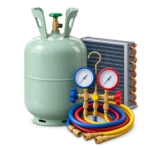 R-22 Refrigerant
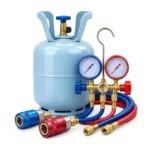 R-1234yf Refrigerant